How to write a CV that gets past the first screen
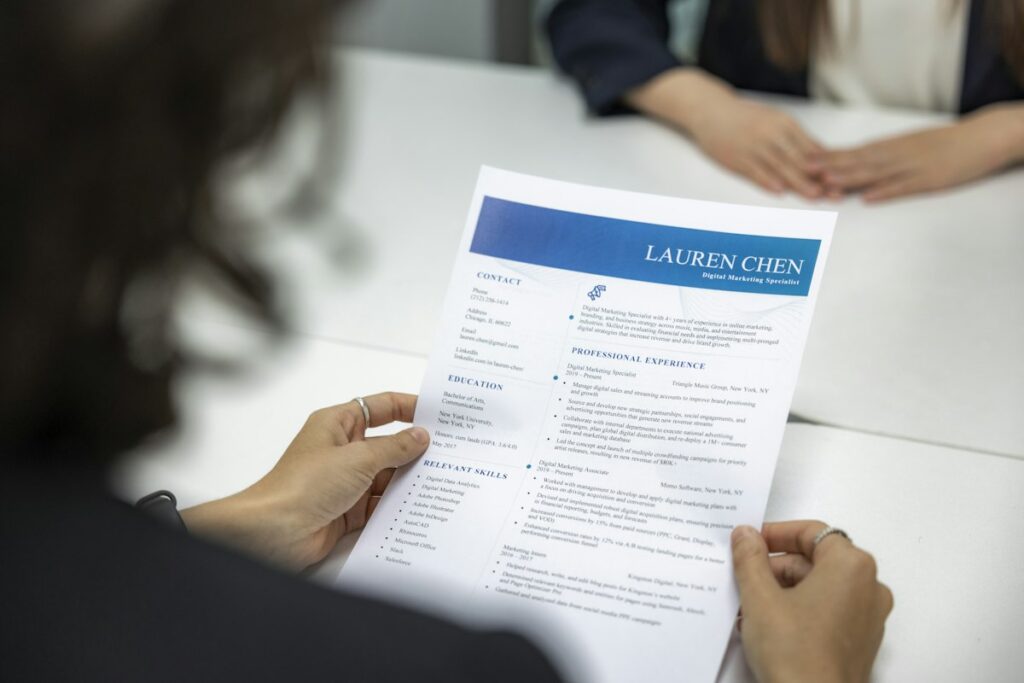
Most CVs get a quick first read — often under a minute — before anyone decides whether to look closer. That first pass isn’t about your whole career. It’s about whether the reader can quickly see that you fit the role in front of them.
Start with a clear top third
Put your name, phone number, email and town at the top. Under that, write two or three lines that say who you are and what you’re looking for: “Accountant with five years in manufacturing finance, looking for a senior role in Colombo.” Skip the photo, date of birth, NIC number and marital status unless the job advert asks for them.
Lead with recent, relevant experience
List your jobs newest first. For each one, give the company, your title and the dates, then three to five bullet points. Write what you achieved, not just what you were responsible for:
- Weak: “Responsible for accounts payable.”
- Strong: “Cleared a three-month supplier backlog and cut payment runs from weekly to fortnightly.”
Numbers help, but only use ones you could explain in an interview.
Match the words in the advert
If the role asks for “stakeholder management” or “SAP experience”, and you have it, say so in those words. Recruiters and screening software both look for them.
Cut what doesn’t earn its place
- Two pages is enough for most people; one is fine early in your career.
- Drop school results once you have a degree or a few years of work.
- Remove “References available on request” — it’s assumed.
- Replace long lists of soft skills with one line of evidence.
Check it before you send it
Save it as a PDF named with your name (Nadeesha-Perera-CV.pdf), read it once on your phone, and ask someone else to look for typos. Small errors are the easiest reason to be passed over.